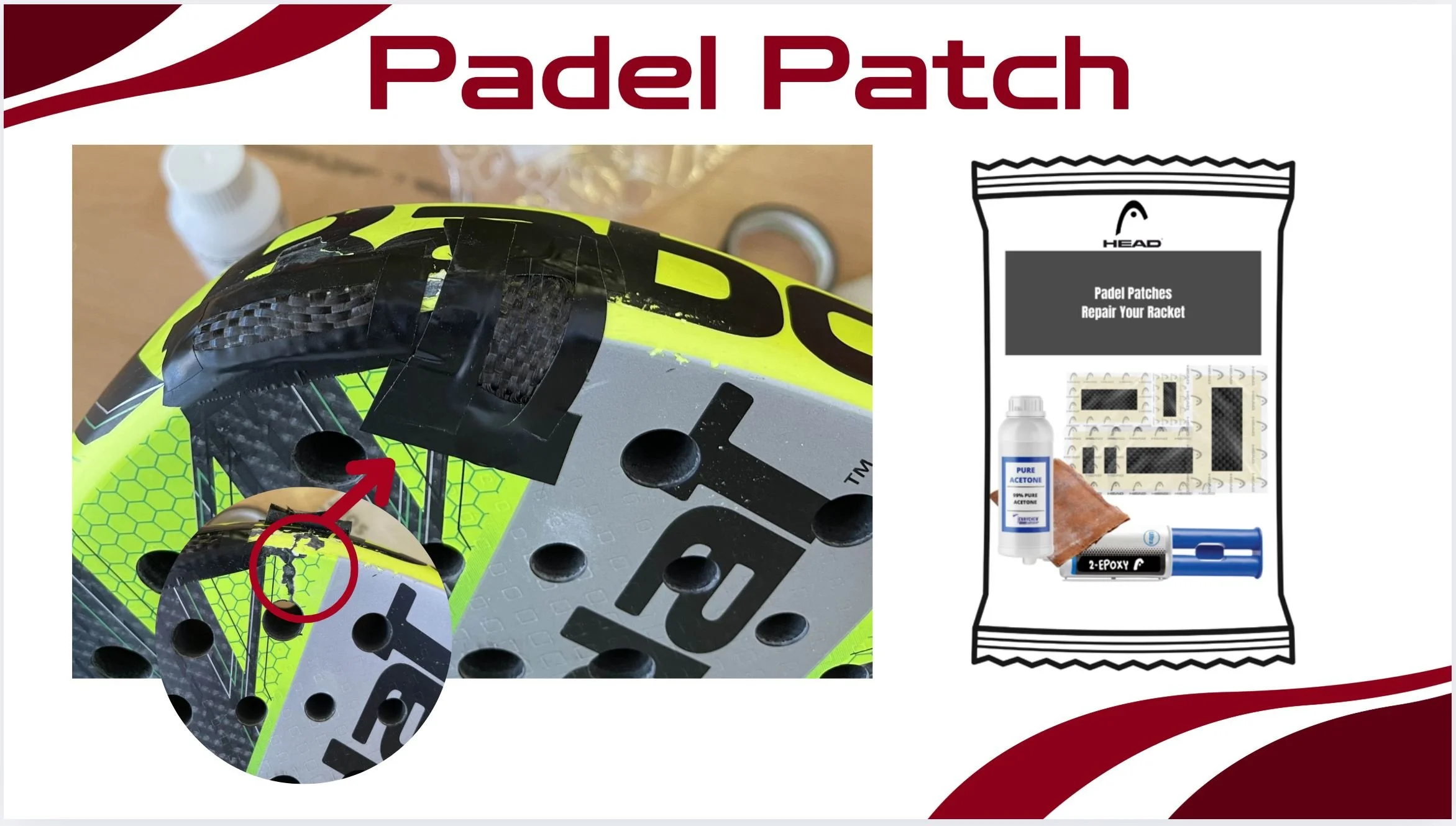
The Padel Patch
A HEAD Design Challenge
Project Overview
This project was completed in collaboration with HEAD, who challenged our team to support the growth of padel in a way that was both cost-effective and sustainable, without altering the identity of the sport. Early-stage research quickly identified a significant barrier to growth: rental rackets break frequently, are expensive to replace (£400–£500), and generate unnecessary waste.
Interviews with players, coaches, retailers, and padel center managers revealed that rental rackets often last only 6–10 weeks. This places a substantial financial burden on facilities and negatively affects the experience of new players, who are frequently introduced to the sport using damaged or poorly performing equipment. Addressing this issue became the central focus of the project.
Problem Framing and Design Approach
The project followed the Double Diamond design framework, moving iteratively between discovery and definition as our understanding of the problem evolved. We immersed ourselves in the padel ecosystem through:
User interviews across multiple stakeholder groups
Insight mapping and assumption testing
Exploration of multiple problem framings and solution directions
Initial concepts included redesigning rackets for increased durability and investigating carbon-fiber recycling pathways. However, user feedback, cost constraints, and feasibility analysis revealed a key insight: redesigning the racket itself was neither practical nor desirable for short-term impact.
Instead, the most effective opportunity lay in extending the lifespan of existing rental rackets.
Concept Development: Repair-Focused Solution
This insight guided the project toward repair-based interventions. Through hands-on prototyping with carbon fiber and two-part epoxy, we tested whether small structural cracks could be repaired without compromising playability or feel.
Iterative prototyping demonstrated that:
Common fracture types could be reliably repaired
Structural integrity and on-court performance were preserved
The repair process was simple, repeatable, and low-risk
Feedback from coaches, players, and padel center managers confirmed that the approach was both viable and acceptable within real operating environments.
Final Outcome: Rental Racket Repair Kit
The final solution was a low-cost, center-operated repair kit designed to extend the usable life of rental rackets. The kit includes:
Pre-cut carbon-fiber patches
Two-part epoxy resin
Acetone and sandpaper for surface preparation
Clear, step-by-step repair instructions
This system enables padel centers to perform repairs in-house, significantly reducing replacement costs, minimizing waste, and ensuring that new players are introduced to the sport using equipment in good condition.
Impact and Industry Engagement
The project culminated in a pitch to HEAD’s Research and Development department, where we presented the full design journey, experimental findings, and the final repair-kit concept. The solution was positioned as a feasible, low-cost, and immediately deployable method for supporting padel’s growth without compromising performance or brand identity.
Key Insights and Learning Outcomes
This project highlighted the importance of continually reframing the problem as new insights emerge, rather than committing prematurely to a single solution. It also reinforced the value of:
Direct user testing over assumption-driven design
Focusing on sustainability as a performance and experience enhancer, not a constraint
Prioritizing solutions that fit naturally into existing systems and workflows
By extending the lifespan of rental rackets, the project demonstrated that small, practical interventions can have meaningful economic, environmental, and experiential impact—supporting HEAD’s goal of growing padel in a responsible and accessible way.
Skills Demonstrated
Human-centered and design-led problem solving
Stakeholder research and interview synthesis
Rapid prototyping with composite materials
Sustainability-driven product design
Design communication and industry pitching
Collaborative teamwork under real-world constraints
Gaining hands on experience.
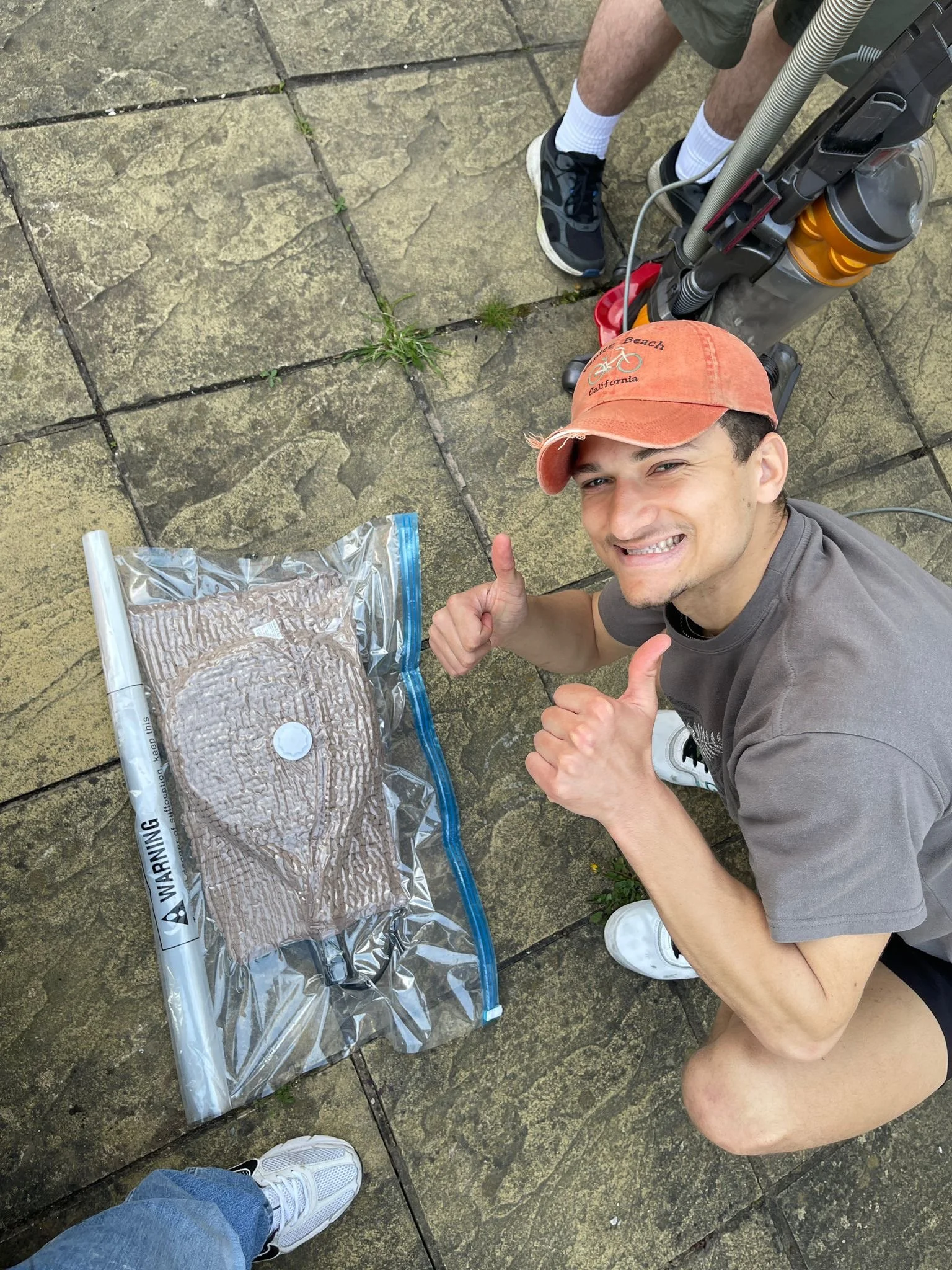
After months of meticulous work, the moment we finally applied our idea to a physical racket in need of repair was incredibly rewarding. Transforming a conceptual design into something tangible brought an entirely new level of fulfillment. It wasn’t just about theory anymore; it was about real-world application and seeing firsthand how our solution could extend the life of a racket that otherwise might have been discarded.
This photo was taken right after we finished setting the epoxy on a broken racket. It’s at such an awkward angle, even the racket looks a little confused about what’s going on. Maybe next time, we'll work on the photography before the repair!